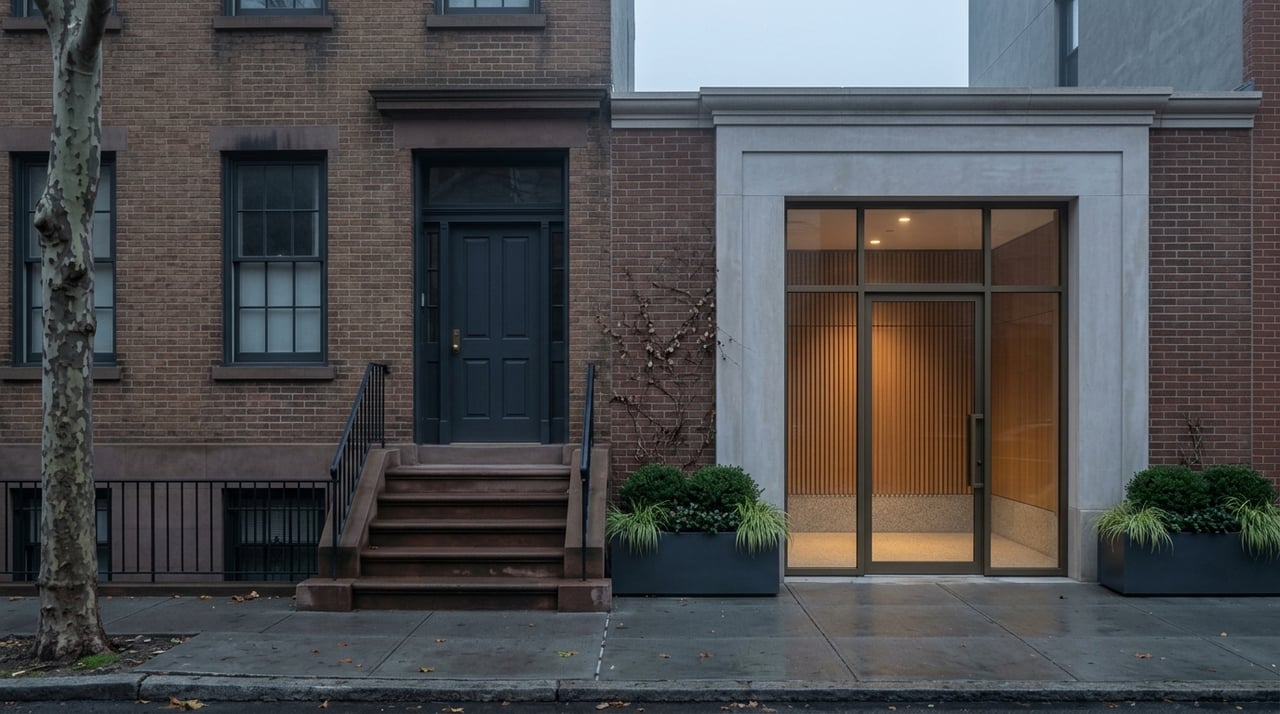
Brooklyn Townhouse vs Condo: How to Choose the Right Fit
Choosing between a Brooklyn townhouse and a condo can feel simple at first, until you start looking at taxes, maintenance, privacy, and long-term resale. What seems like a style choice is often really a lifestyle and financial decision. If you are weighing both options in Brooklyn, it helps to understand how ownership works, what costs can surprise you, and how the market is behaving today. Let’s dive in.
The biggest difference between a townhouse and a condo is not just the building type. It is how much control, responsibility, and shared decision-making you want in your day-to-day life.
With a condo, you own your individual unit and a proportionate interest in the building’s common elements, which can include things like halls, lobbies, yards, gardens, storage, parking, and shared building systems under the New York Condominium Act. In practical terms, that means you own your home, but some parts of the property are managed collectively.
A townhouse is usually much closer to direct homeownership. In New York City, homeowners are generally responsible for sidewalk repair, snow and ice removal, freeze protection for pipes and meters, and exterior upkeep, according to NYC homeowner resources. If you want more autonomy, that can be appealing. If you want fewer hands-on responsibilities, it may feel like a lot.
A Brooklyn condo often appeals to buyers who want a more predictable ownership experience. Many building-related expenses are pooled through common charges, and the board or management handles shared systems and common areas.
That structure can make condo living feel more streamlined, especially if you want a city home with less owner-level maintenance. But it also means you should look closely at the building itself, not just the apartment.
Common charges are each unit owner’s share of common expenses under the statute. If common charges go unpaid, they can become a lien on the unit, which is one reason a building’s reserves, financial health, and assessment history matter when you buy and when you eventually sell, as outlined in the state law.
For you as a buyer, this means monthly carrying costs are only part of the picture. A lower common charge may look attractive, but it is still worth understanding whether the building has a history of assessments or deferred work.
Condo common elements may include outdoor areas, storage, parking, and recreational facilities. Those amenities can add convenience and value, but they are shared assets rather than fully private space under the Condominium Act.
If you picture outdoor space as truly your own, that distinction matters. If you are comfortable with a more structured setup, a condo may offer a simpler path to city living.
A townhouse can offer a very different ownership experience. In many cases, you have more direct control over the building and site, which can be a major advantage if privacy and customization are high on your list.
That said, greater control usually comes with greater responsibility. In Brooklyn, townhouse ownership is often best suited to buyers who are comfortable managing repairs, exterior maintenance, and ongoing upkeep.
Townhouses are often attractive because they can provide a stronger sense of separation from neighbors and more control over how you use your home. But that independence also means you are not sharing many building responsibilities with a larger ownership group.
According to NYC homeowner guidance, homeowners are responsible for a range of exterior and safety-related obligations. Before buying, it is smart to ask yourself whether you want to oversee those details directly or prefer a more managed environment.
Some Brooklyn townhouses sit within historic districts. In those cases, exterior work may require Landmarks Preservation Commission permits, including changes to windows, roofs, stoops, fences, and handrails, according to NYC homeowner resources.
That does not make a townhouse less desirable, but it can affect timing, cost, and renovation flexibility. If your decision depends on future updates, landmark status should be part of your due diligence.
Many buyers focus on purchase price first, but in Brooklyn, tax treatment can change the monthly and long-term cost of ownership in meaningful ways. Two properties on the same block may have very different tax structures based on how they are legally classified.
NYC property tax class matters here. The city’s assessment definitions explain that Class 1 generally covers most residential properties of up to three units and some smaller condos, while Class 2 covers other primarily residential properties, including many condos and co-ops.
For tax year 2026, NYC property tax rates list rates of 19.843% for Class 1 and 12.439% for Class 2, with different assessment ratios and phase-in rules. That means you should not assume a townhouse will always have lower taxes than a condo, or vice versa. The legal classification drives the math.
Some condo owners may benefit from the NYC Cooperative and Condominium Property Tax Abatement if the unit is a primary residence and the development is tax class 2. The annual benefit ranges from 17.5% to 28.1%, and the board or managing agent applies on behalf of the development.
This can materially improve the cost picture for a primary residence. It is less useful if the condo will not be your primary home, since the eligibility rules require primary residence use.
Closing costs matter in both categories, especially because many Brooklyn condos and townhouses trade above $1 million. NYC transfer tax rules state that the city’s Real Property Transfer Tax is 1% up to $500,000 and 1.425% above that for residential transfers, while New York State’s mansion tax adds 1% on residential purchases at $1 million or more, with additional NYC taxes on residential conveyances at $2 million or more.
Recent market data shows why this matters. In Douglas Elliman’s Brooklyn Q4 2025 report, the median condo sales price was $1,090,000 and the median for 1 to 3 family homes was $1,180,000. In other words, both property types often cross key tax thresholds.
Your decision is about how you want to live now, but resale still matters. In Brooklyn, condos and townhouse-style homes are not moving in exactly the same way.
According to the Q4 2025 Elliman report, Brooklyn condos had a median sales price of $1,090,000 and averaged 59 days on market, while 1 to 3 family homes had a median of $1,180,000 and averaged 73 days on market. That suggests condos have recently been somewhat faster-moving, while townhouse-type homes remain more individualized.
The same report found that Brooklyn condo median price rose 9.1% year over year in Q4 2025, while the 1 to 3 family median fell 1.7%. That does not mean one category is always the better investment, but it does show that condo demand has remained resilient in the latest data.
StreetEasy’s January 2026 contract report also noted that 60.2% of Brooklyn condo contracts were for homes priced at $1 million and above, even as overall condo contract volume declined year over year. That points to continuing activity at the higher end of the condo market.
Townhouses often trade on factors that are harder to standardize, including lot size, block, condition, renovation quality, and landmark status. That can create opportunity, but it can also make comparisons less straightforward.
The brownstone segment highlights this clearly. In the Elliman report, brownstone Brooklyn recorded a median sales price of $3.1 million in Q4 2025. That reinforces how location-specific and scarcity-driven top-tier townhouse pricing can be.
If you are deciding between a townhouse and a condo, it often helps to frame the choice around your own priorities rather than broad assumptions.
A condo may be the better fit if you want:
A townhouse may be the better fit if you want:
If part of your thinking involves occasional-use or rental plans, it is important to understand NYC occupancy rules. NYC HPD guidance states that housing units must be used for permanent occupancy of 30 days or more, and illegal short-term rental advertising can trigger significant fines in buildings with three or more units.
That means neither a townhouse nor a condo should be viewed as a typical short-term-rental strategy. Your decision should center on ownership, use, and long-term goals rather than short-term rental assumptions.
The right choice in Brooklyn usually comes down to how you want to balance control, convenience, costs, and future flexibility. If you want a more private, hands-on ownership experience, a townhouse may be the stronger fit. If you prefer shared services, potentially easier day-to-day management, and a more standardized ownership structure, a condo may make more sense. If you want tailored guidance on how these tradeoffs apply to your search, the Gladstone Karadus Team offers discreet, data-driven support designed around your goals.




Gladstone Karadus Team is dedicated to helping you find your dream home and assisting with any selling needs you may have. Contact them today for a free consultation for buying, selling, renting or investing in New York.

220 W 19TH ST FL 5 NEW YORK NY 10011