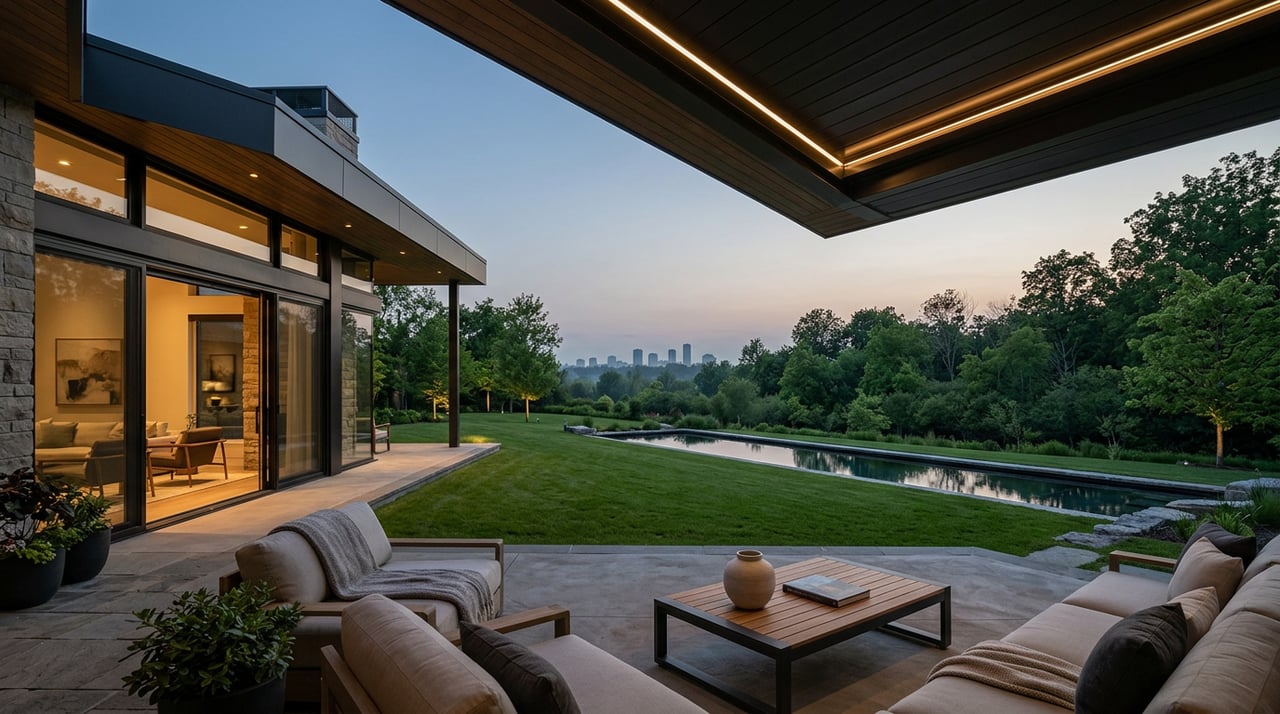
Selling In NYC, Upsizing In The Capital Region
What if one NYC sale could buy you a backyard, a home office, and a quiet street in Albany? If you are weighing more space, cleaner air, and a calmer pace, you are not alone. In this guide, you will see how your NYC equity can translate into a larger home in the Capital Region, what the timing really looks like, and how to line up financing so your move feels seamless. Let’s dive in.
Citywide, the NYC median sale price recently hovered near the high six figures. PropertyShark’s Q1 2025 report placed it around $768,000. In the Capital Region, regional snapshots point to much lower medians, with many months in 2025 landing roughly $290,000 to $330,000 depending on county and submarket. You can review the latest Capital Region market snapshots for context.
What that means for you: the sale of a single NYC apartment can often fund a comfortable single-family home or a larger condo or house in Albany or nearby towns. Many NYC sellers compare against Albany city prices that trend in the low to mid 300s, which makes the upsize even more compelling.
To visualize the difference, look at independent metro comparisons of how much space $400,000 buys across cities. In premium NYC neighborhoods, that budget buys far less square footage than in upstate markets, while Albany-type markets deliver substantially more living area for the same spend. See PropertyShark’s analysis of how much space $400k buys across cities for a clear side-by-side.
Your sale and purchase will likely span a few months. From listing an NYC apartment to moving into an Albany home, plan for about 3 to 6 months, sometimes longer if a co-op board is involved. Condos often close faster than co-ops because there is no personal interview step, but both typically run in the 60 to 90 day range from contract to closing.
| Property type | Key steps | Typical contract to close |
|---|---|---|
| Co-op | Buyer financing, full board package, board review and interview | About 60 to 90 days, sometimes longer if board schedules are tight |
| Condo | Buyer financing, standard building approvals, no personal interview | Often 60 to 90 days with fewer approval steps |
Tip: begin assembling any co-op board package early so financing and board review can run in parallel. Ask your agent and attorney for a week-by-week checklist.
Your net proceeds drive your buying power upstate. Plan for these seller line items:
Build a conservative estimate with your agent and attorney so you know your down payment and cash-on-hand before you write offers in the Capital Region.
Here is an illustrative example using published medians:
With roughly $705,000 available, you could comfortably target many Capital Region price bands. Regionwide medians in 2025 often fell around $290,000 to $330,000 per GCAR’s market snapshots. That leaves room for closing costs, improvements, or a smaller mortgage, depending on your goals.
There is no single right path. Pick the sequence that fits your risk tolerance and budget.
If you need to act before your NYC proceeds clear, consider these tools and discuss specifics with your lender and attorney:
House hunting while wrapping up a city sale takes planning. Many buyers rely on the Amtrak Empire Service between NYC and Albany, which typically runs about 2.5 to 3 hours from Penn Station to Albany–Rensselaer. Group your Albany showings into focused trips and keep your NYC sale timeline visible to your agent team so you can pivot as needed.
You want advisors who speak both languages: Manhattan co-op and condo sales, and upstate purchase mechanics. Our team pairs white-glove NYC listing expertise with on-the-ground guidance across the Hudson Valley, and we coordinate closely with vetted Capital Region partners when Albany is your end goal. The result is one plan, one standard of service, and fewer surprises from contract to keys.
Ready to map your move from city to more space? Connect with the Gladstone Karadus Team to Schedule a Private Consultation.
Gladstone Karadus Team is dedicated to helping you find your dream home and assisting with any selling needs you may have. Contact them today for a free consultation for buying, selling, renting or investing in New York.

220 W 19TH ST FL 5 NEW YORK NY 10011