Everyday Life In A Flatiron Live-Work Loft
What does everyday life actually feel like in a Flatiron live-work loft? If you are drawn to open space, big windows, and a neighborhood that supports both productivity and downtime, Flatiron offers a distinct rhythm that is hard to replicate elsewhere in Manhattan. From flexible loft layouts to transit convenience and plaza-centered daily routines, here is what you can realistically expect from live-work life in Flatiron. Let’s dive in.
Flatiron and NoMad function as a true mixed-use district, not a neighborhood that goes quiet once office hours end. According to the Flatiron NoMad Partnership, the area includes 36 million commercial square feet, more than 100,000 daily workers, more than 35,000 residents, and more than 18.6 million visitors to the Flatiron plazas in 2024.
For you as a buyer, that mix matters. It means your surroundings tend to feel active, connected, and service-rich throughout the day, with a balance of work energy, residential life, and everyday foot traffic.
A loft is traditionally a large, open space that was often adapted from industrial use into residential living. As Britannica explains, modern urban lofts are commonly converted and then arranged to suit how residents actually live.
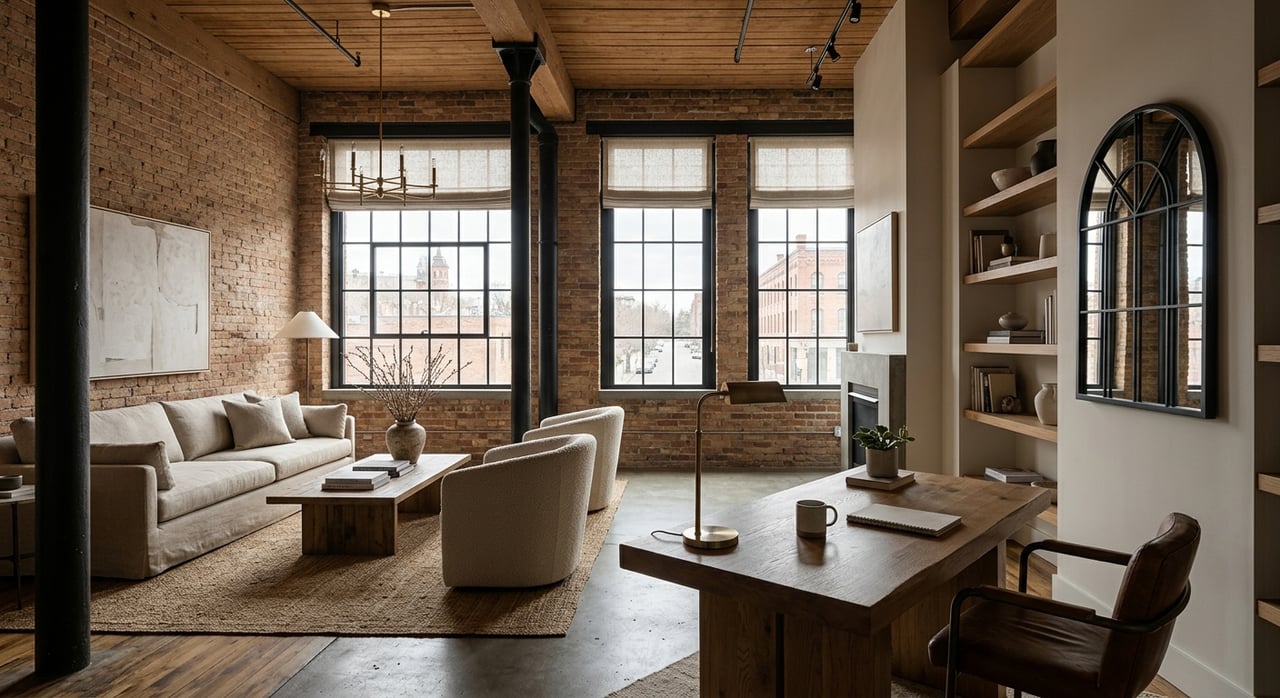
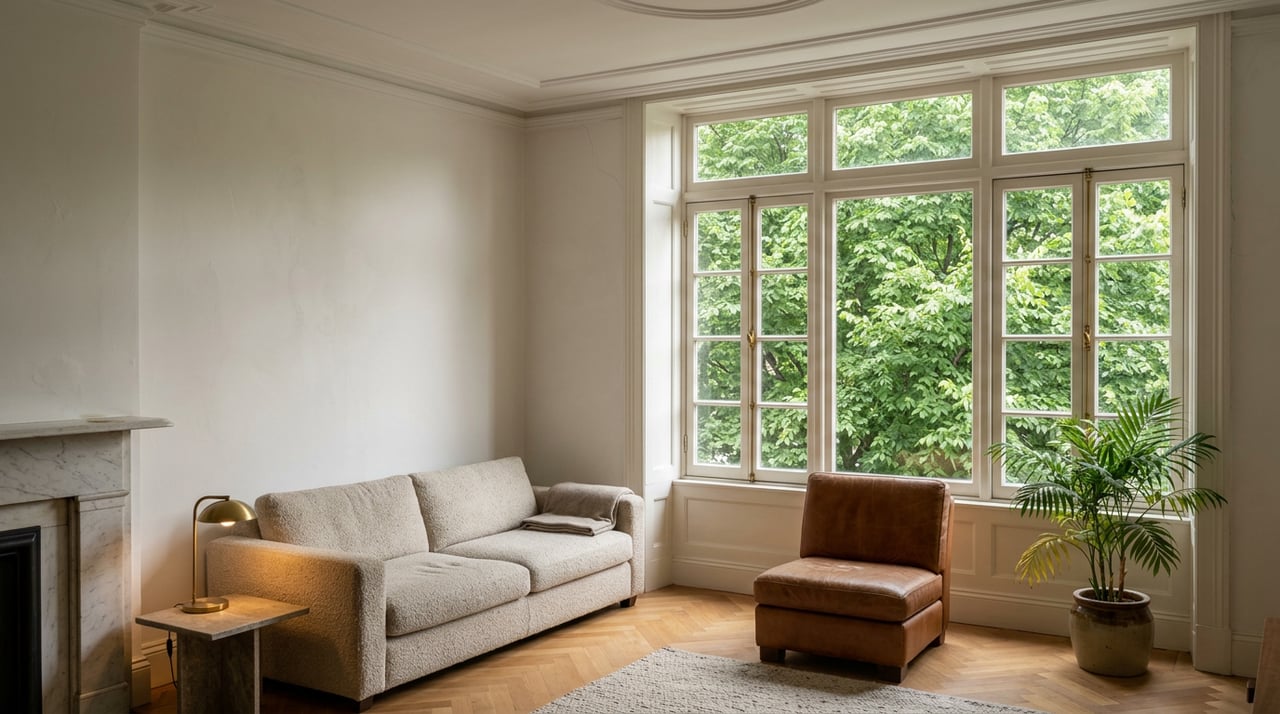
In practical terms, that usually means open plans, tall ceilings, oversized windows, and fewer fixed walls. Instead of moving between many small rooms, you are often shaping one expansive space into different zones for work, dining, reading, hosting, and relaxing.
This flexibility is one of the biggest draws of a live-work loft. You can often set up a desk near natural light, define a lounge area with furniture placement, and still preserve the openness that makes a loft feel special.
Recent local examples show that clearly. CityRealty highlighted a full-floor Flatiron and Union Square loft with a 12-foot beamed ceiling, exposed brick, a large living-dining room, and a glass-walled home office. In nearby new-development inventory, Flatiron House has offered full-floor loft-style residences with lofty ceilings, floor-to-ceiling windows, private planted spaces, and in some homes direct elevator entry.
If you plan to spend long stretches at home, natural light becomes more than a nice extra. Strong daylight can make a workspace feel usable all day and help different parts of an open layout feel intentional instead of blended together.
That is why many buyers focus closely on window size, ceiling height, and whether the home has enough exposure to support both living and working. In a loft, light helps define the mood of the entire space.
Even if you love openness, you may still want some privacy for calls, concentration, or a cleaner visual boundary between work and home. Buyers often ask whether there is a separate room, enclosed niche, or glass-partitioned office that can support video calls and focused work.
The strongest live-work setups usually combine openness with at least some acoustic or visual separation. That balance tends to make the home feel easier to use every day, especially if your workweek is partly home-based.
A Flatiron live-work loft is not just about the apartment. The neighborhood outside your door plays a major role in how your day unfolds.
Flatiron and NoMad have become notably more pedestrian-friendly. The district’s Broadway Vision plan describes a public realm with full plazas, shared streets, two-way bike lanes, greenery, and shorter crossings.
That changes the daily feel of the area. Instead of treating the neighborhood as a place you pass through, you are more likely to use it between meetings, errands, or breaks. A quick coffee run, lunch outside, or short reset walk becomes a natural part of the routine.
The public-space network includes Flatiron North Plaza, Flatiron South Plaza, NoMad Piazza, Madison Square Park, and smaller plazas throughout the district. If you work from home often, that access to outdoor space can make the neighborhood feel more livable and less confined.
For many buyers, this is a meaningful part of the appeal. A live-work setup functions better when you can step out easily for a break without needing to plan your whole day around it.
Madison Square Park adds an important civic and social layer to everyday life in Flatiron. The park spans 6.2 acres and is described by the conservancy as both a neighborhood park and an international destination, with about 60,000 daily visitors.
Because the park also hosts public art and programming, Flatiron often feels more social and public-facing than a purely office-driven district. For you, that can translate into a neighborhood with more visual variety, more people out and about, and more reasons to stay local during the day.
One of Flatiron’s strongest qualities is how practical it is. If your life includes a mix of home time, office time, client meetings, and city errands, convenience can become just as important as square footage.
The neighborhood is highly transit-connected. The Flatiron NoMad Partnership notes access to the F and M at 23rd Street and Sixth Avenue, the R and W at 23rd Street or 28th Street along Broadway, the 6 at 23rd, 28th, or 33rd Street along Park Avenue, PATH at 23rd and 33rd Street, and several bus routes.
If you commute only part of the week, this kind of access can make a real difference. It gives you flexibility without requiring the lifestyle tradeoffs that can come with a more isolated location.
Flatiron also performs well as an everyday dining neighborhood. In March 2025, the district partnership reported that 11 local restaurants were Certified Green, making Flatiron and NoMad New York City’s first Green-Dining Destination.
Just as important, the neighborhood offers a broad all-day mix of cafes, casual spots, upscale restaurants, wine bars, and familiar anchors around Madison Square Park. That variety supports the kind of schedule many live-work buyers actually have, where breakfast, lunch, coffee meetings, and dinner may all happen close to home.
Open loft living can be beautiful, but it works best when the building itself reduces friction. In Flatiron, renovated and newer buildings often include features that make hybrid work and daily organization much easier.
Amenity packages vary, but local examples show common features such as attended lobbies, concierge or doorman service, elevators, storage, bike rooms, fitness centers, and roof or terrace areas. Flatiron House includes an attended lobby, central garden, lounge, game room, gym, landscaped terrace, and on-site parking access.
The same source also notes that The Cammeyer includes a full-time doorman, attended lobby, resident storage, fitness center, rooftop terrace, mail room, bike room, live-in superintendent, and in-unit washer and dryer. For a live-work buyer, these details can have an outsized effect on how smooth daily life feels.
A roof deck can give you a change of scene during the day. Storage can help keep work materials from taking over the main living space. A staffed lobby can make deliveries and arrivals feel more seamless.
Those features do not define every loft, but they can significantly improve how an open home functions. In many cases, the right building support is what turns a visually appealing loft into one that also works well on a practical level.
If you are considering a Flatiron live-work loft, it helps to evaluate the home with your daily routine in mind rather than just the floor plan. The best fit is usually not simply the largest space. It is the one that supports how you actually live and work.
The local examples in the research suggest that the strongest candidates are often full-floor or expansive loft units with generous light, some acoustic separation, and building amenities that support daily ease.
Flatiron tends to appeal to buyers who want energy, design, convenience, and flexibility in one place. It is not defined by the quiet of a purely residential enclave, and that is often exactly the point. The neighborhood offers a blend of daily movement, transit access, outdoor public space, and loft-style homes that can adapt to a modern routine.
If you want a home that supports work without feeling cut off from city life, Flatiron stands out as a compelling option. And if you are weighing specific buildings, loft conversions, or newer full-floor residences, working with a team that understands both layout quality and lifestyle fit can make your search far more strategic.
If you are considering a purchase in Flatiron and want tailored guidance on loft layouts, building amenities, and the lifestyle tradeoffs between downtown neighborhoods, the Gladstone Karadus Team offers discreet, high-touch support shaped by deep Manhattan market expertise.
Gladstone Karadus Team is dedicated to helping you find your dream home and assisting with any selling needs you may have. Contact them today for a free consultation for buying, selling, renting or investing in New York.

220 W 19TH ST FL 5 NEW YORK NY 10011